


In a continuously operating CNC metal-machining workshop, heat is not the only challenge. Machine tool motors, spindles, and the machining process itself generate constant heat, while cutting fluids can form oil mists that disperse into the air. Relying solely on additional cooling equipment without addressing air treatment may lower the temperature, but it fails to resolve issues like oil mist contamination or the accumulation of residue inside machinery.
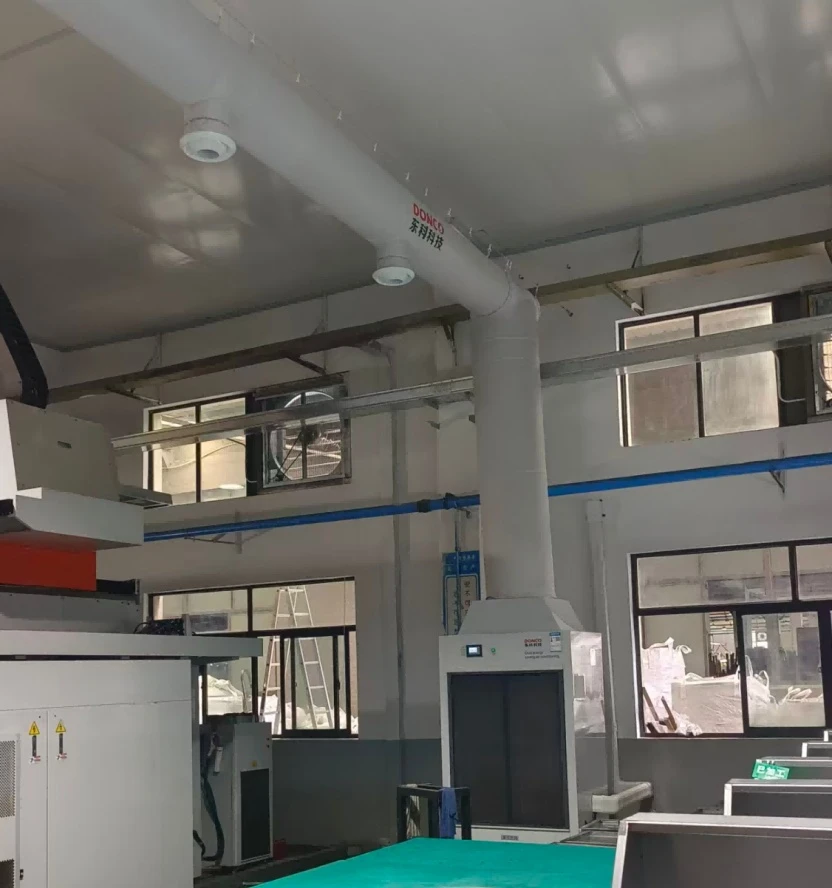
Therefore, the design of industrial air conditioning for CNC workshops should evaluate cooling, air circulation/filtration, and oil mist control as distinct yet synergistic components. In areas with high oil mist concentrations, collection or filtration systems tailored to the specific operating conditions should be installed near the source of the pollution; this prevents contaminants from entering the air conditioning return-air system. Meanwhile, the industrial air conditioning system focuses on overall temperature control and air circulation. Compared to simply exhausting large volumes of hot air outdoors, this approach prevents the loss of air that has already been cooled.
Maintenance is another frequently overlooked factor. Over time, oil residue and dust can accumulate on filters and heat exchanger surfaces, increasing air resistance and reducing effective airflow. Consequently, when assessing whether a CNC workshop's oil mist control and air conditioning system is suitable for long-term use, one must consider not only the initial cooling capacity but also the ease of cleaning or replacing filters, the ability to operate different production zones independently, and long-term maintenance costs.
When configuring industrial air conditioning for metal-machining environments, DONCO advocates for an integrated design that combines cooling and air treatment. By segmenting the workshop based on factors such as the number of machine tools, oil mist levels, existing exhaust systems, and production shifts, a more efficient and logical synergy between temperature control and air treatment can be achieved.