


Why does it still feel noticeably hot near the injection molding machines, even when high-capacity air conditioning systems are installed? A common reason is that the cooling challenge in an injection molding workshop is not merely about managing the thermal load of a standard building; rather, it involves addressing a continuous heat source generated by production equipment operating over long periods. If the cooling system is selected based solely on floor area and the number of personnel, the actual cooling capacity may fail to align with the demands of the production environment.
During operation, injection molding machines-along with their heating systems, motors, and auxiliary equipment-continuously emit heat, often in a concentrated layout. When multiple production lines are running simultaneously, the localized thermal load in the workshop can be significantly higher than in areas like packaging or storage. Therefore, an effective industrial air conditioning strategy for an injection molding workshop should begin with a detailed assessment of the number of machines, their power ratings, and operational shifts. This data, combined with factors such as ceiling height, outdoor climate, fresh air intake, and target temperatures, should form the basis for a comprehensive load analysis-rather than simply applying a generic "cooling capacity per square meter" formula.
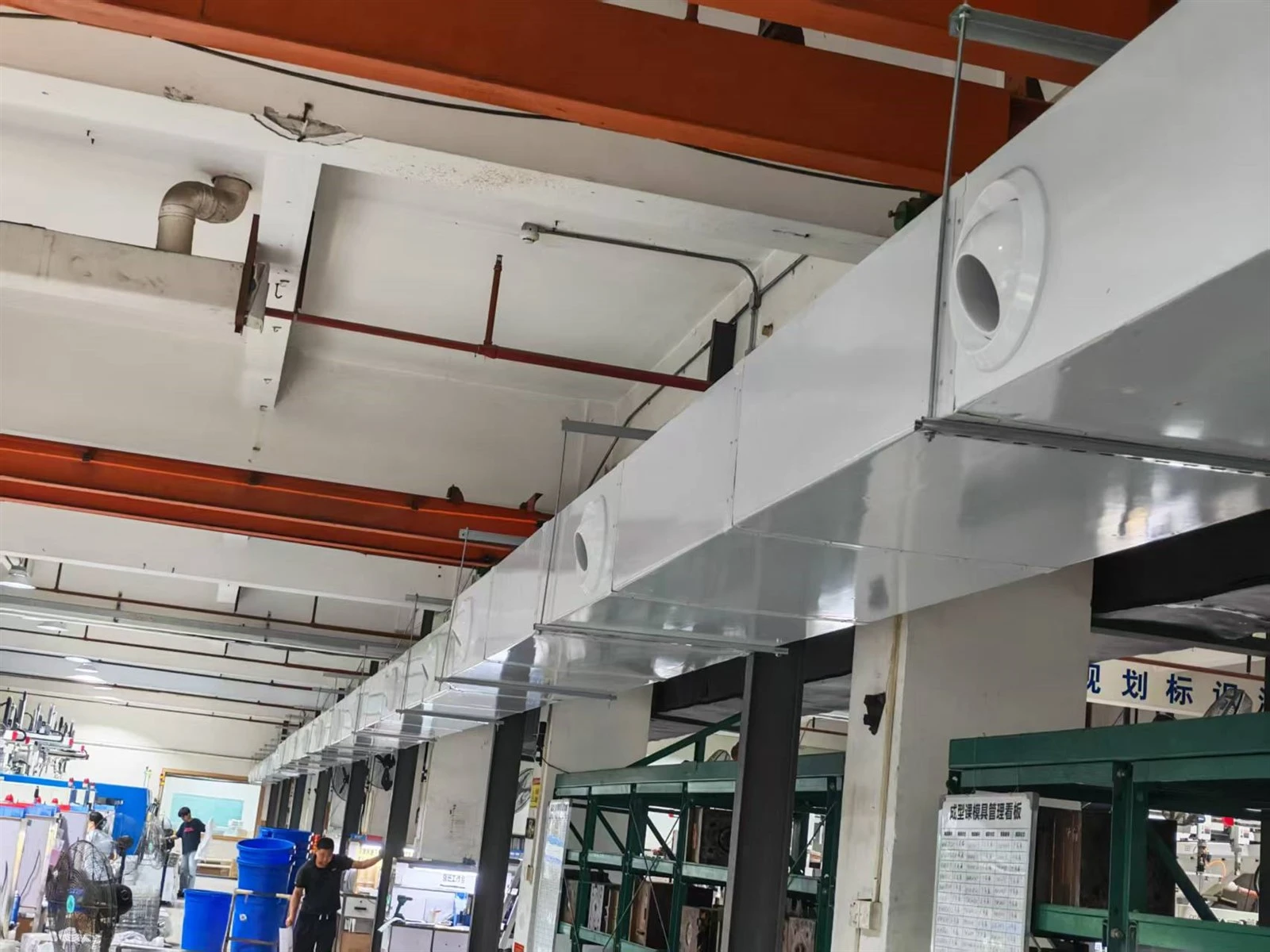
Another effective approach is to allocate cooling capacity based on specific production zones. For instance, high-heat injection molding areas can be managed separately from lower-heat packaging areas; when certain production lines are shut down, cooling output in those specific zones can be reduced. For factories with limited electrical capacity, this zoned control strategy also helps minimize unnecessary peak power consumption.
Ultimately, the core challenge in cooling an injection molding workshop lies in the persistent thermal load from the machinery. When designing industrial air conditioning solutions for plastics and rubber manufacturing facilities, DONCO incorporates factors such as equipment heat output, workshop layout, and production cycles into the initial design phase. This ensures that the air conditioning system is precisely tailored to the actual production load, rather than being based merely on the facility's floor area.