


In textile workshops-such as those for spinning or weaving-industrial air conditioning systems may perform well initially, but after a period of operation, users often notice a drop in airflow and slower cooling. This issue does not necessarily stem from a lack of cooling capacity; in environments with high levels of airborne lint, the air filtration system is the first component that should be examined.
During continuous textile production, fine fibers and lint are drawn into the return-air stream. If an industrial air conditioning system is designed using standard specifications-as one might for a general factory-the filters can quickly become clogged with lint, leading to increased air resistance. While the compressor may continue to run, the effective volume of circulating air decreases, often resulting in uneven temperatures, particularly in areas of the workshop furthest from the units. Therefore, the priority for filtration systems in textile mills is not merely to increase filtration precision, but to implement effective pre-filtration tailored to the specific nature of the contaminants, while ensuring that filter components are easy to remove, clean, and maintain.
For textile mills that require a high volume of fresh outdoor air, it is also essential to account for the additional cooling load introduced by this intake. If filtration, fresh-air intake, return-air circulation, and cooling systems are designed in isolation, the equipment may appear sufficient on paper, yet fail to deliver the desired performance in practice.
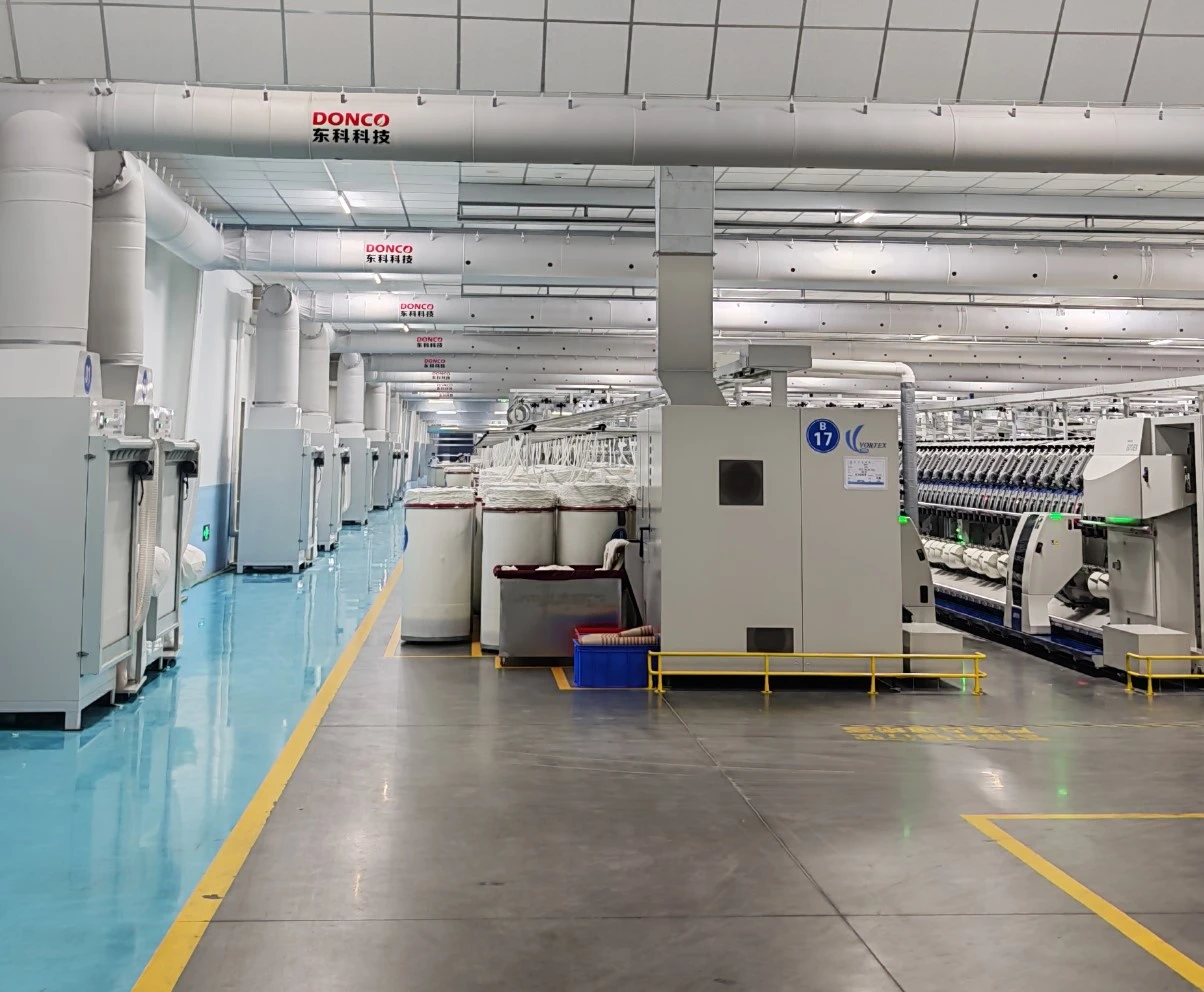
Consequently, when evaluating a cooling solution for a textile workshop, one must look beyond simple cooling capacity requirements. It is equally important to consider factors such as the frequency of filter cleaning, whether cleaning disrupts production, and how quickly the system can return to its design airflow after maintenance. DONCO's industrial air conditioning solutions for the textile sector are configured by holistically analyzing lint concentration, fresh-air requirements, production shifts, and workshop layout. By integrating long-term maintenance considerations into the initial equipment selection phase, potential issues-such as a decline in airflow-can be proactively addressed rather than managed as reactive problems later on.